



Behind every durable plastic stool, chair, or table lies a sophisticated manufacturing process called injection molding. It's the technology that makes modern injection molded plastic furniture possible — producing strong, precise, consistent products at a fraction of the cost of alternative manufacturing methods.
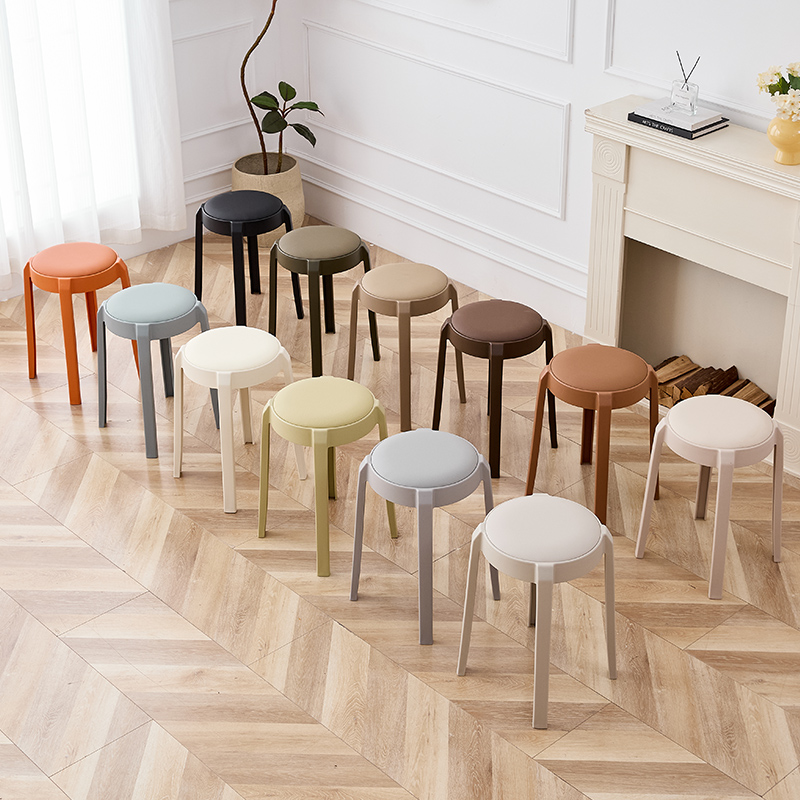
For buyers sourcing plastic furniture in bulk, understanding how an injection molding furniture manufacturer operates helps you evaluate suppliers, identify quality issues, and make more informed purchasing decisions. Let's break down the process.
What Is Injection Molding?
Injection molding is a manufacturing process in which molten plastic is injected under high pressure into a precision-machined steel mold. The plastic takes the shape of the mold cavity, cools, and then is ejected as a finished part. For furniture, this allows the production of complex shapes — ergonomic curves, reinforcing ribs, decorative textures — as single, strong, seamless pieces.
The Injection Molding Process: Step by Step
Step 1 — Mold Design and Machining
Everything begins with the mold. Engineers design a steel mold based on the 3D product model, accounting for material shrinkage, cooling channels, ejector pins, and gate locations. A quality plastic injection manufacturer machines these molds to tight tolerances using CNC equipment — accuracy here directly determines product quality.
Step 2 — Material Preparation
Plastic pellets (typically PP or PE) are dried to remove moisture and fed into the injection machine's hopper. Colorants or UV stabilizers are added at this stage if required.
Step 3 — Melting and Injection
The pellets are heated to a molten state and injected under high pressure into the closed mold. Pressure and temperature are precisely controlled — a matter of a few degrees or seconds can make the difference between a perfect part and a defective one.
Step 4 — Cooling
Once the mold is filled, the molten plastic cools and solidifies. Cooling channels within the mold carry coolant to speed this process and ensure even solidification.
Step 5 — Ejection and Finishing
The mold opens and ejector pins push the finished part out. Any excess plastic (flash) is trimmed, and the part undergoes inspection. For furniture, multiple parts may be assembled — for example, a cushioned stool combines a molded shell with a foam pad and fabric cover.
Advantages of Injection Molded Furniture
| Advantage | Explanation | Benefit to Buyers |
|---|---|---|
| Precision | Tight dimensional tolerances | Consistent size, guaranteed stackability |
| Consistency | Identical parts across production runs | Uniform quality in every order |
| Strength | Integrated ribs and one-piece structure | High load capacity, durability |
| Design freedom | Complex shapes and ergonomic curves | Attractive, functional designs |
| Cost efficiency | Low per-unit cost at volume | Competitive wholesale pricing |
| Speed | Rapid cycle times (30-120 seconds) | Fast bulk production |
Materials Used in Injection Molded Furniture
Polypropylene (PP): The most common furniture plastic — tough, flexible, food-safe, and recyclable
Polyethylene (PE/HDPE): Excellent for outdoor furniture due to UV and impact resistance
ABS: Higher-end option with a glossy finish and superior strength (used in premium chairs)
Recycled blends: Increasingly popular for sustainable furniture lines
Quality Control in Injection Molding
A reliable molding furniture supplier implements multiple quality checkpoints:
Material verification: Confirming incoming resin meets specifications
In-process monitoring: Real-time tracking of injection pressure, temperature, and cycle time
Dimensional inspection: Measuring finished parts against design tolerances
Visual inspection: Checking for flash, sink marks, warping, or color inconsistency
Load and functional testing: Verifying finished furniture meets load and durability requirements
The Role of Mold Ownership in Custom Furniture
If you're developing custom injection molded plastic furniture, the mold is the core asset. Mold costs typically range from $3,000 to $30,000+ depending on size and complexity. Key considerations:
Who owns the mold? To protect your design, negotiate ownership transfer after a minimum production commitment
Mold lifespan: Quality steel molds last 100,000+ cycles — amortizing cost over high volumes
Mold maintenance: Professional factories maintain molds to ensure consistent quality over years
Xinlang Furniture's Injection Molding Capability
Xinlang Furniture operates a modern plastic molding factory with advanced injection molding equipment. Our capabilities include:
Multiple injection molding lines running in parallel for high-volume orders
In-house mold design and manufacturing — full control over quality and lead times
Precision temperature and pressure control for consistent product quality
Experienced engineering team capable of designing furniture with structural reinforcement
Full material flexibility — PP, PE, HDPE, ABS, and recycled blends
Frequently Asked Questions
What products are typically made by injection molding?
Plastic stools, chairs, armchairs, side tables, storage boxes, and countless other plastic products. Any part with a consistent, complex shape can be injection molded — making it ideal for mass-produced furniture.
What is the minimum order quantity for custom injection molded furniture?
Because custom molds require significant tooling investment, MOQ for new custom designs is typically 500+ units. For existing molds with color or branding changes, MOQ starts at 100-200 units.
How long does a custom mold take to produce?
Typical mold development takes 3-8 weeks depending on complexity. This is followed by sample production and approval, then bulk production. Total timeline for a new custom product is usually 10-16 weeks.