



Ask any restaurant owner what they would change about their first fit-out and seating comes up fast. Not the look — the economics. Upholstered chairs stain, wooden chairs loosen, and anything that cannot be stacked eats the floor area you need for events. This guide covers how to specify stackable plastic chairs that survive commercial duty cycles while still looking deliberate rather than cheap.
Rethinking the Total Cost of Seating
The mistake most venue owners make is optimizing for upfront cost. When you need forty chairs for a new restaurant, the initial price tag gets attention, but it is rarely the most important number.
Consider what happens to upholstered seating: within six months someone spills red wine, a few months later a guest cuts the fabric, grease becomes embedded. You are soon paying for professional cleaning or living with furniture that quietly signals poor maintenance.
Quality plastic chairs bypass most of this. A spill wipes up, grease cleans off completely, and a scratch from dragging across the floor is cosmetic rather than a dirt trap. Calculated over three to five years, plastic usually wins decisively on total cost of ownership.
What "Commercial Grade" Actually Means
The difference between a residential plastic chair and a commercial one is engineering, material selection and quality control — not marketing.
Commercial-grade chairs use higher-grade plastics with UV stabilizers, which matter even indoors near windows; impact modifiers that prevent cracking when a chair is dropped or knocked over; and sometimes fiberglass reinforcement at critical stress points.
Wall thickness is calculated differently too. A residential chair minimizes material to hit a price. A commercial version puts material where it matters: reinforced leg junctions, thicker seat pans, and connection points that will not loosen after months of daily use.
Stackability as an Operational Tool
If you have never operated a venue needing flexible seating, stackability looks like a minor convenience. In practice it changes how you use the space.
A cafe that hosts evening events needs chairs arranged for daytime coffee service, then cleared entirely for open floor space. With stackable plastic chairs that transition takes minutes. With heavy wooden or assembled metal furniture it takes significant labor time.
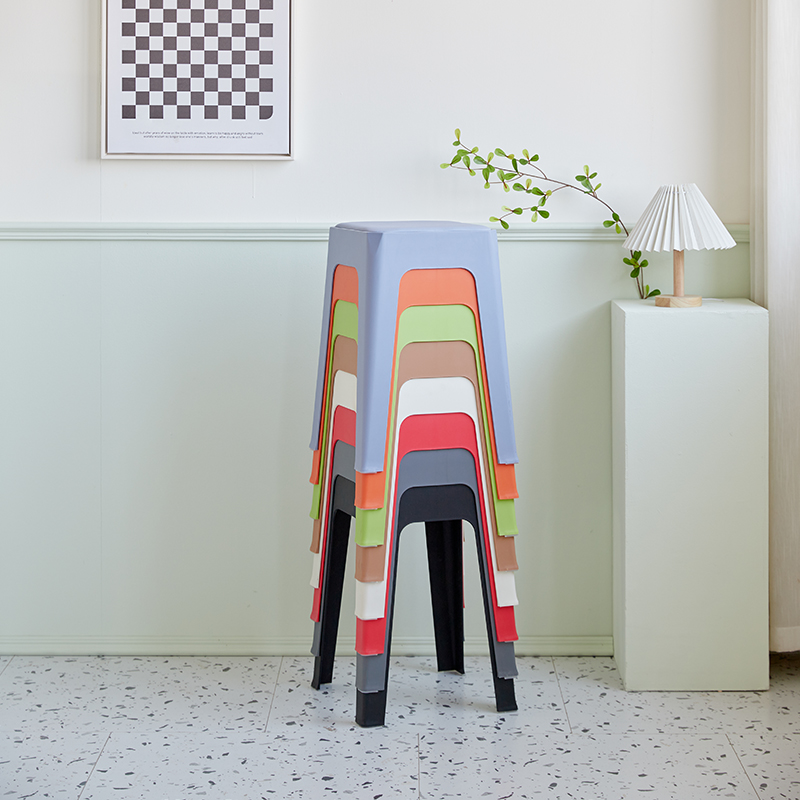
The engineering behind good stacking is more sophisticated than it appears: chairs must nest without scratching, form stable stacks that will not topple, and release easily when unstacked. Poorly designed stacking chairs frustrate staff and damage easily; well-designed ones become invisible tools that smooth daily operations.
Cleaning Economics and Turnaround Time
Cleaning labor is a real line item. A plastic chair wipes down in seconds with standard cleaning agents and dries immediately, so a table can be turned faster between sittings.
Fabric requires extraction cleaning, drying time and periodic replacement. Wood requires careful products to avoid finish damage. Plastic tolerates the harsher chemicals commercial kitchens actually use.
Over a year, the labor saved on cleaning alone often exceeds the price difference between a budget chair and a commercial-grade one.
Color Strategy for Hospitality
Color deserves more thought than "what looks nice". In restaurant settings darker colors hide dirt between cleanings but show dust and lint more readily; lighter colors create an airy, spacious feeling but demand more frequent cleaning.
Match color choice to your cleaning capacity and lighting. Bright, well-lit venues can carry lighter seating; low-light venues with limited staff turnover between services are better served by mid or dark tones.
Xinlang offers personalized color matching for project orders, so a chain can maintain identity across locations while choosing tones appropriate to each site's operating pattern.
Planning for Replacement and Growth
Before ordering, ask whether the supplier can provide matching replacements months or years later. Venues lose chairs to damage and grow through additional covers; if the model is discontinued, a partial replacement forces a full refit.
Ask about warranty terms and the process for handling defective units. These answers reveal whether a supplier thinks long-term or simply wants to close a sale.
Xinlang Furniture accommodates sample orders so you can evaluate products in your actual venue before committing to larger quantities — a low-risk way to confirm comfort, color and durability under your own conditions.
Frequently Asked Questions (FAQs)
Q: How many chairs should I order for a 60-cover restaurant?
A: Order for peak covers plus a replacement buffer of roughly ten percent, and add stackable spares for private events. Because stackable chairs store compactly, holding spares costs very little floor area compared with non-stacking seating.
Q: Are plastic chairs comfortable enough for long dining sessions?
A: Comfort comes from geometry rather than padding: a lumbar-supporting backrest, a subtly dished seat pan and a rolled front seat edge. Xinlang's Ergonomic Backrest and Contoured Back Plastic Chairs are designed for exactly this.
Q: How do I stop stacked chairs from scratching each other?
A: Choose chairs with engineered nesting geometry that prevents seat-to-seat contact damage, and train staff to lift rather than drag when unstacking. Quality moulded PP resists visible scuffing far better than coated surfaces.
Q: Can I mix stools and chairs in one venue?
A: Yes, and many venues do. Matching PP stools at counters or bar-height areas alongside dining chairs creates visual consistency while addressing different seating heights. Xinlang's stool and chair ranges share material and color language.
Conclusion
Specifying stackable plastic chairs for a venue is a total-cost exercise: cleaning labor, storage flexibility, replacement supply and durability all matter more than the unit price. Choose commercial-grade construction with UV stabilizers and impact modifiers, verify nesting geometry, and confirm long-term replacement availability. Xinlang Furniture supplies commercial plastic seating with OEM color matching and sample-order support. Discuss your venue requirements with Xinlang Furniture.