



A high performance stackable plastic stool is one of the few pieces of furniture that quietly solves three problems at once: extra seating, vertical reach, and storage pressure. For apartments, studios, dorm rooms and busy family kitchens, the ability to pull out a stool in seconds and then stack five of them into a single narrow column is worth more than any decorative feature. This guide explains what actually makes a stackable plastic stool perform well, which specifications matter, and how to match the right model to your space.
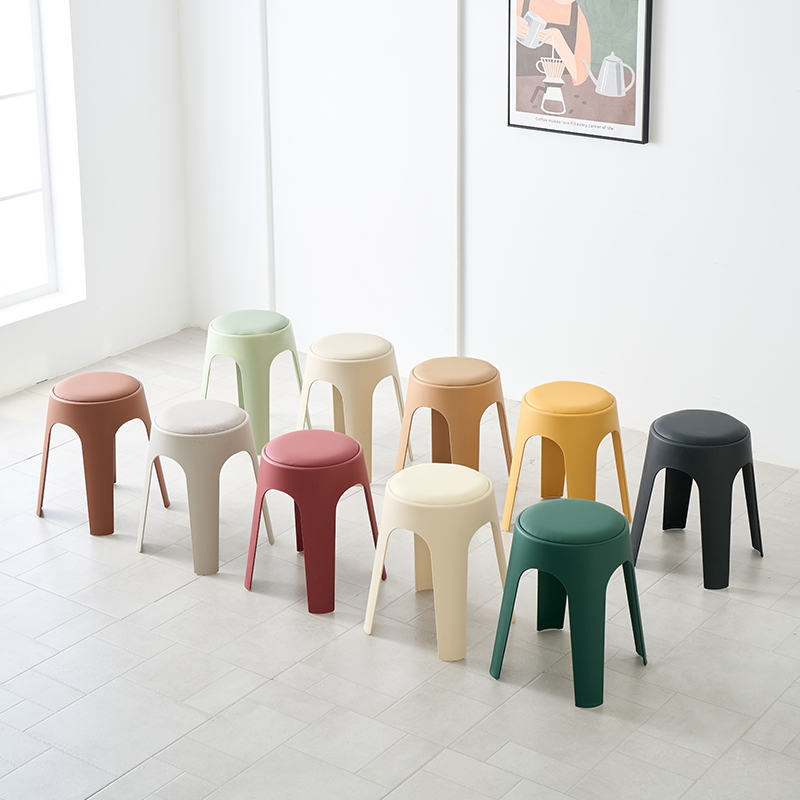
What Makes a Stackable Plastic Stool "High Performance"?
Not every plastic stool is engineered to the same standard. A high performance stackable plastic stool is defined by four measurable things: material grade, wall thickness distribution, stacking geometry, and foot stability. Entry-level stools use thin-wall recycled polypropylene that flexes under load and creaks after a few months. A performance-grade stool uses virgin or controlled-blend PP with impact modifiers, so the seat pan returns to shape instead of permanently deforming.
Xinlang Furniture manufactures its Multi-Scenario Plastic Stool with a one-piece integrated structure and smooth, rounded edges. That single-piece construction removes the joint failure points that plague assembled stools, and the rounded edges eliminate sharp corners that snag clothing or bruise shins in tight hallways.
The standard footprint is compact by design: 32 cm (length) x 32 cm (width) x 47 cm (height) on the Modern Versatile Plastic Stool. That height lands in the comfortable range for most adults at a dining counter or kitchen island, while the 32 cm square top stays small enough to tuck under a table or beside a doorway.
Load Capacity and Real-World Safety Margins
Load rating is the number most buyers check first, and it is also the number most frequently overstated in the market. A credible high performance stackable plastic stool carries a stated capacity with an engineering margin built in. Xinlang's multi-scenario stool is rated to support up to 150 kg (330 lbs), which covers adult users across the full weight spectrum rather than only light-duty child use.
Equally important is what happens at the edge of the seat. Cheap stools fail at the rim, where the seat pan meets the leg wall. Reinforced rim geometry spreads point loads into the leg structure, which is why a well-designed plastic stool can take adult weight year after year without the spiderweb cracking that appears on budget imports.
Non-slip feet are the third safety element. Rubber or TPE feet keep the stool planted on tile, polished concrete and hardwood, and the slightly textured seat surface adds grip when the stool is used as a step.
Stacking Geometry: The Feature That Decides Whether You Actually Use It
Stackability sounds simple until you own a badly designed set. Good stacking geometry means the stools nest without scratching the seat finish, the column stays stable at full height, and each unit releases cleanly when you pull it off the top. Poor geometry means jammed stacks, scuffed surfaces, and staff or family members who simply stop stacking them.
Xinlang's stackable plastic stool range is designed to stack up to five units while occupying minimal floor area. Five stools in the footprint of one is the practical difference between a hallway you can walk through and a hallway you have to navigate around.
For distributors and retailers, stackability also changes the freight math. Xinlang packs 12 pieces per carton (carton size 40" x 40" x 115"), which is a direct result of the nesting depth. Higher units per carton means lower landed cost per stool and less warehouse racking per SKU.
Material Choice: Why PP (Polypropylene) Dominates
Polypropylene is the workhorse material for modern plastic furniture for good reason. It is lightweight, chemically stable, food-contact safe in the right grade, and recyclable at end of life. A PP plastic stool weighs roughly 1.2 kg (2.6 lbs), light enough for a child to carry and move, yet stiff enough not to bow under load.
PP is also naturally waterproof and corrosion-resistant. Unlike a wooden stool that swells and cracks, or a metal stool that rusts at the welds, a PP stool can live outdoors on a balcony, be rinsed with a hose, and go straight back into service. Xinlang aligns this with its "Green Symbiosis" philosophy: durable enough to withstand daily wear, light enough to move easily, and recyclable at the end of a long service life.
The smooth, non-porous surface is the maintenance advantage most buyers notice later. Spills, marker, food residue and garden soil wipe off with a damp cloth. There is no fabric to stain, no varnish to strip, and no rust treatment to schedule.
Matching Color and Finish to Your Interior
Color is where a plastic stool stops being purely utilitarian. Xinlang stocks a curated palette including warm orange, soft white, gentle beige, neutral gray and deep brown. Warm orange reads as an accent in a minimalist kitchen; soft white and beige disappear into Scandinavian and Japandi schemes; neutral gray is the safe commercial choice; deep brown grounds earthy, eclectic rooms.
Because the color is integral to the material rather than painted on, scratches and scuffs do not expose a different color underneath. This is a meaningful durability difference from coated metal or painted wood seating.
For project buyers, Xinlang offers personalized color matching, size adjustments and material variations on request, which lets a hotel group, cafe chain or retailer build a consistent visual identity across dozens of units.
Where a Stackable Plastic Stool Earns Its Keep
In the kitchen it works as a step stool for high cabinets and as breakfast seating at an island. In the bathroom it gives children safe reach to the sink and gives adults a perch for skincare routines, with no water damage risk. In a home office it becomes client seating or a printer stand.
Commercially the same stool absorbs overflow seating in cafes, co-working spaces, waiting areas and retail showrooms. Its modern look and durable build handle high foot traffic without the refurbishment cycle that upholstered seating demands.
Outdoors it covers balcony coffee, patio gatherings, gardening and barbecue overflow. The same unit moves between all of these roles without any change in maintenance routine.
Frequently Asked Questions (FAQs)
Q: How many plastic stools can be stacked together?
A: Xinlang's stackable plastic stool is engineered to stack up to five units in a stable column. Beyond five, the stack height becomes awkward to reach and less stable on uneven floors. For higher-volume venues, storing in columns of five side by side is safer than building taller stacks.
Q: What weight can a plastic stool safely hold?
A: The Xinlang Multi-Scenario and Modern Versatile Plastic Stools are rated up to 150 kg (330 lbs). Always use the stool on a level surface and avoid standing on the very edge of the seat, where the load path is least favorable.
Q: Is a plastic stool safe for outdoor use?
A: Yes. PP plastic is waterproof and corrosion-resistant, so rain and humidity do not degrade it. UV stabilizers are recommended for permanent full-sun exposure; ask your supplier about UV-stabilized grades if the stools will live outdoors year-round.
Q: How do I clean and maintain a plastic stool?
A: Wipe with a damp cloth or rinse with water. The non-porous surface repels dirt and stains, so harsh chemicals are unnecessary. Avoid abrasive scouring pads, which can dull the surface finish over time.
Conclusion
A high performance stackable plastic stool is a specification purchase, not an impulse purchase. Check the material grade, the load rating, the stacking depth and the foot design, and you end up with seating that works in the kitchen, the bathroom, the home office and the patio without a single maintenance task. Xinlang Furniture's plastic stool range is built around exactly these criteria, with OEM color and size options for project buyers. Browse the Xinlang Furniture plastic stool and plastic chair catalogue to match a model to your space.