



Plastic chairs have moved decisively away from the bargain-basement reputation they carried twenty years ago. Modern injection-moulded seating now appears in design-led restaurants, co-working spaces, hotel terraces and family dining rooms, chosen deliberately rather than for lack of alternatives. This comprehensive guide covers what plastic chairs are made of, how commercial-grade construction differs from residential, and which model suits each application.
What Exactly Is a Modern Plastic Chair?
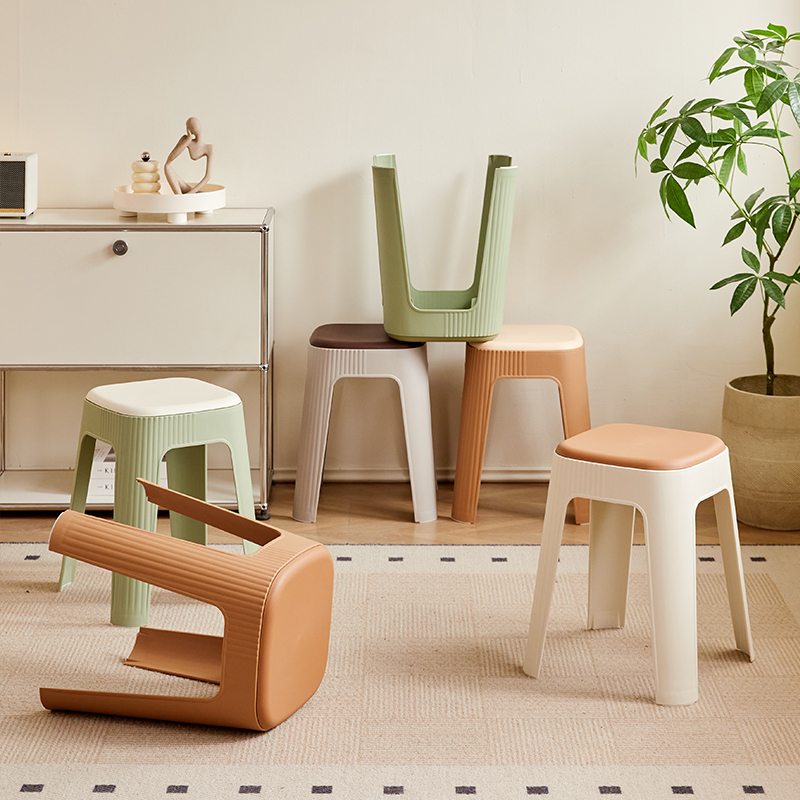
A modern plastic chair is a single-material seating unit produced by injection moulding, usually from polypropylene (PP), sometimes blended with fiberglass or impact modifiers for commercial duty. The defining manufacturing advantage is that complex curves, integrated backrests and reinforcing ribs can be produced in one cycle, with no fasteners and no assembly.
Xinlang Furniture's chair range illustrates the breadth now available: the Ergonomic Backrest Plastic Chair, the Contoured Back Plastic Chair, the Textured Shell Plastic Chair, and the Modern Swivel Armchair. Each uses the same base material logic with different geometry for different sitting postures.
Because the material is integral rather than applied, the finish resists chipping and peeling. A scuff on a moulded PP chair is cosmetic; the same scuff on a coated metal chair exposes bare substrate and starts a corrosion clock.
Material Science: PP, Impact Modifiers and UV Stabilizers
Polypropylene gives plastic chairs their core property set: low weight, chemical inertness, waterproof behavior and full recyclability. On its own, standard PP can become brittle at low temperatures and can chalk under sustained UV exposure.
That is why commercial-grade plastic chairs add impact modifiers to prevent cracking when a chair is dropped or dragged, and UV stabilizers to protect color and surface integrity near windows or outdoors. Fiberglass reinforcement at critical stress points, particularly the leg junctions and the seat-to-back transition, is the third upgrade.
When you compare two visually identical chairs and one cracks in year two, the difference is almost always in these additive packages and in wall thickness distribution rather than in the visible design.
Commercial Grade vs Residential Grade
The distinction is engineering, not marketing. A residential plastic chair is designed for predictable, low-frequency use by a small number of known users. A commercial-grade chair is designed to be moved multiple times daily, to support users of widely varying weight, and to be cleaned with harsher chemicals.
In practice this means reinforced leg junctions, thicker seat pans, tighter tolerances at connection points, and more rigorous testing protocols during production. Xinlang Furniture adjusts its manufacturing process for commercial clients accordingly, with additional quality control on stress-critical areas.
For a restaurant owner, this is the difference between replacing a seating order in eighteen months and getting five years or more out of the same purchase.
Ergonomics: Backrest Geometry and Seat Comfort
Comfort in a plastic chair comes from geometry, not padding. The backrest should meet the lumbar region with a slight curve, the seat pan should have a subtle dish to locate the sitter, and the front edge of the seat should roll downward to avoid pressure behind the knees.
The Ergonomic Backrest Plastic Chair and the Contoured Back Plastic Chair from Xinlang apply these principles in different visual languages: one more open and minimal, one more enveloping for longer sitting sessions. The Textured Shell Plastic Chair adds surface grain for tactile interest and additional grip.
Seat height matters as much as backrest shape. Standard dining height pairs with a 72–75 cm table; counter height requires a taller stool; lounge applications suit the lower, wider geometry of the Modern Swivel Armchair.
Stackability and Space Economics
For cafes, event venues, community centers, training rooms and places of worship, stackability is an operational tool rather than a convenience. A room that hosts coffee service by day and an open-floor event by night can be reconfigured in minutes with stacking chairs.
Well-engineered stackable chairs nest without scratching, form stable columns that will not topple, and separate easily when unstacked. Poorly designed ones jam, scuff and frustrate staff, which means they end up stored loosely and consuming floor area anyway.
Xinlang's plastic furniture line is designed with nesting depth in mind, which also improves container utilization for export orders.
Application Scenarios: Where Plastic Chairs Win
Dining rooms benefit from easy cleaning and light weight for daily rearrangement. Offices and co-working spaces use them for breakout areas and overflow meeting seating. Outdoor terraces and poolside areas benefit from waterproof construction that survives rain without treatment.
Hospitality venues, from quick-service restaurants to hotel banquet rooms, value the combination of low maintenance, consistent color and replaceability months or years after the original order. Educational and community settings value the safety of rounded, one-piece construction.
The Modern Swivel Armchair suits reception and lounge zones where a more relaxed posture is expected, while the side tables in the same material family complete the setting.
Total Cost of Ownership
The purchase price is the least informative number in a seating decision. Factor in expected service life, cleaning labor, replacement cost and the operational cost of storage and reconfiguration.
Upholstered seating in a restaurant accumulates wine, grease and knife damage, requiring professional cleaning or early replacement. Plastic chairs wipe clean and keep their appearance, which is why total cost of ownership over three to five years usually favors them decisively.
Buyers should ask suppliers about warranty terms, defect handling, and whether matching replacement chairs can be supplied months or years after the initial purchase. A supplier who answers those questions confidently is thinking long-term.
Frequently Asked Questions (FAQs)
Q: Are plastic chairs suitable for commercial restaurant use?
A: Yes, provided you specify commercial-grade models. Look for impact-modified PP, UV stabilizers, reinforced leg junctions and a stated load rating. Xinlang Furniture produces chairs specifically engineered for commercial duty cycles and higher-traffic environments.
Q: How long do plastic chairs last?
A: With commercial-grade construction and normal use, expect several years of service in hospitality settings and considerably longer in residential use. Lifespan depends mainly on additive package, wall thickness, UV exposure and cleaning chemistry.
Q: Can plastic chairs be used outdoors permanently?
A: PP is waterproof and corrosion-resistant, so rain is not a problem. For permanent full-sun placement, request UV-stabilized material to prevent color fading and surface chalking.
Q: Do you offer custom colors and sizes?
A: Xinlang Furniture offers personalized color matching, size adjustments and material variations on request, subject to order quantity. This allows brand consistency across multi-site projects.
Conclusion
Plastic chairs now cover the full range of seating needs, from a family dining table to a high-turnover restaurant terrace, because the material and the manufacturing process have both matured. Select on material grade, ergonomic geometry, commercial-duty construction and stackability rather than on headline price, and the result is seating that stays attractive and functional for years. Xinlang Furniture manufactures plastic chairs, stacking stools and matching side tables for residential and commercial buyers worldwide. Explore the full Xinlang Furniture catalogue of plastic chairs, stacking stools and side tables.