



China remains the world's most efficient source for moulded plastic furniture, but the gap between a good factory and a mediocre one is wide and invisible in photographs. Global buyers who source successfully do so by auditing process rather than product. This guide sets out the quality control checkpoints that matter, the certifications to request, and the commercial terms that protect a container order.
Why China Leads in Moulded Plastic Furniture
Moulded plastic furniture is capital-intensive: the tooling is expensive and the economics depend on volume, resin availability and process expertise. China's furniture manufacturing clusters combine all three, which is why unit costs stay competitive at high quality levels.
Xinlang Furniture is based in Bazhou, Hebei, within one of North China's established furniture manufacturing belts. Founded in April 2016, the company runs a 15,000 square meter facility with more than 80 skilled employees focused specifically on plastic furniture.
Specialization matters here. A factory that makes only plastic furniture has process knowledge — cooling cycles, gate placement, shrinkage compensation — that a generalist furniture plant does not.
Quality Control Checkpoints That Actually Matter
Incoming resin inspection is the first gate: grade verification and batch documentation before material enters the press. Without it, everything downstream is guesswork.
In-process checks cover wall thickness, weight consistency, flash removal and surface finish. Weight consistency is an especially useful proxy: if unit weight drifts, material or cycle parameters have drifted with it.
Final inspection should include load verification, stacking fit, foot seating, color consistency against a reference sample, and packing integrity. Xinlang verifies its stated 150 kg capacity against engineered geometry rather than treating it as nominal.
Load Testing and Safety Standards
Ask for the test method behind any load claim. Static load testing seats a specified weight for a defined duration; dynamic or impact testing drops a weight onto the seat to simulate real use. Both matter, and a supplier who can describe both is worth shortlisting.
For commercial buyers, also ask about stability testing — the tendency to tip under off-center loading — and about fatigue testing for repeated sit-stand cycles.
Non-slip foot performance on wet or polished floors is a further safety checkpoint, particularly for hospitality and healthcare-adjacent applications.
Material Certification and Environmental Compliance
Request documentation that the PP grade is non-toxic and food-contact safe where applicable, and that no restricted substances are present. European and North American buyers increasingly require this paperwork at import.
Recyclability is the other environmental axis. PP is readily recyclable, and Xinlang's "Green Symbiosis" philosophy frames durability and recyclability as complementary: a stool that lasts a decade and then re-enters the material stream has a far lower footprint than a cheap unit replaced annually.
Lightweight construction contributes here too. A 1.2 kg stool costs less to ship per unit than a comparable wooden or metal stool, reducing transport emissions per piece.
Packing Density and Landed Cost
Landed cost per unit is where Chinese sourcing either works or does not. The variables are carton quantity, container utilization and damage rate in transit.
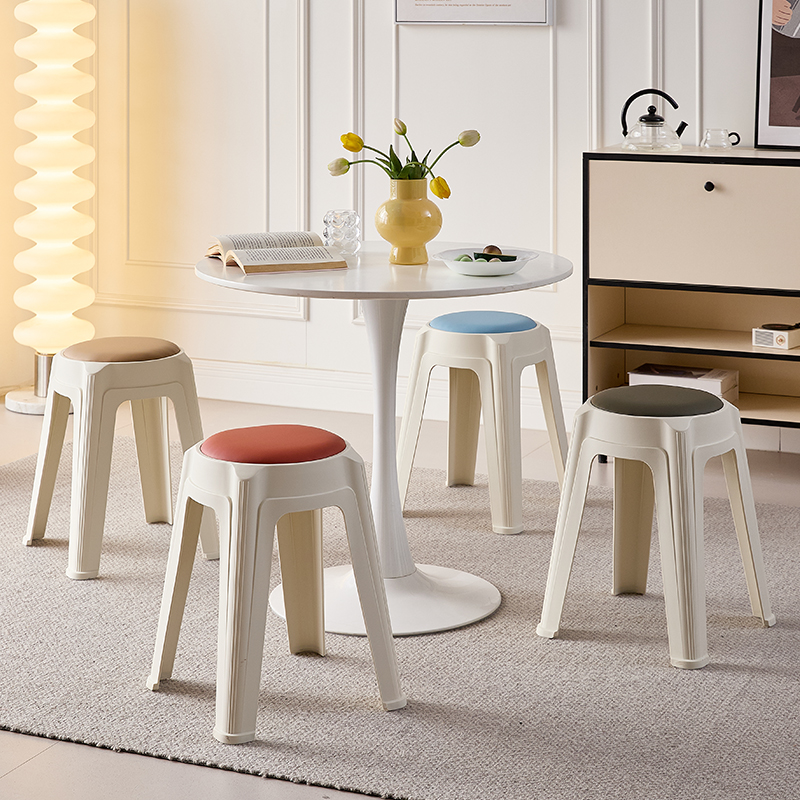
Xinlang packs 12 pieces per carton for the Modern Versatile Plastic Stool (carton size 40" x 40" x 115"), a direct result of designing nesting depth into the product. Better nesting means more units per container and lower freight per stool.
Confirm whether the factory has export packing experience. Corner protection, carton grade and palletization decisions made by an experienced exporter show up as a lower damage rate on arrival.
OEM, ODM and Private Label Options
Most global buyers are not buying a generic stool, they are buying a private-label SKU. Confirm that the factory can handle custom color matching, size adjustment, material variation and buyer-supplied packaging or labeling.
Xinlang provides personalized color matching, size adjustments and material variations on request, and supports bulk order configurations for distributors and retailers.
Agree on color reference standards up front — physical swatches beat digital values — and retain approved samples on both sides for dispute resolution.
Frequently Asked Questions (FAQs)
Q: How do I verify a Chinese furniture factory is legitimate?
A: Request business registration, factory photos or video of the production floor, a virtual or third-party audit, and export references. Manufacturer status is confirmed when the company can describe its own moulds, press capacity and QC process in technical detail.
Q: What certifications should I ask for?
A: Ask for material safety documentation for the PP grade, any applicable quality management certification, and test reports supporting load and stability claims. Requirements vary by destination market, so confirm with your importer of record.
Q: What is the typical lead time for a container order?
A: Lead time depends on model, quantity and customization. Standard models from stock-oriented production move fastest; custom colors and sizes add tooling and scheduling time. Confirm the schedule in writing before deposit.
Q: How should I handle defects on arrival?
A: Agree on an inspection protocol and a defect threshold before shipment, and document with photographs. Reputable manufacturers including Xinlang Furniture back their products with after-sales support and will address confirmed manufacturing defects.
Conclusion
Sourcing plastic furniture from China rewards buyers who audit process instead of judging photographs. Verify incoming resin control, in-process weight consistency, load and stability testing, material documentation, packing density and OEM capability, and the product quality follows. Xinlang Furniture combines a 15,000 m2 Bazhou facility, more than 80 skilled employees and a twelve-model plastic furniture range engineered for residential and commercial duty. Request full specifications and a quotation from Xinlang Furniture.